The Emperor’s Unrelenting Obsession
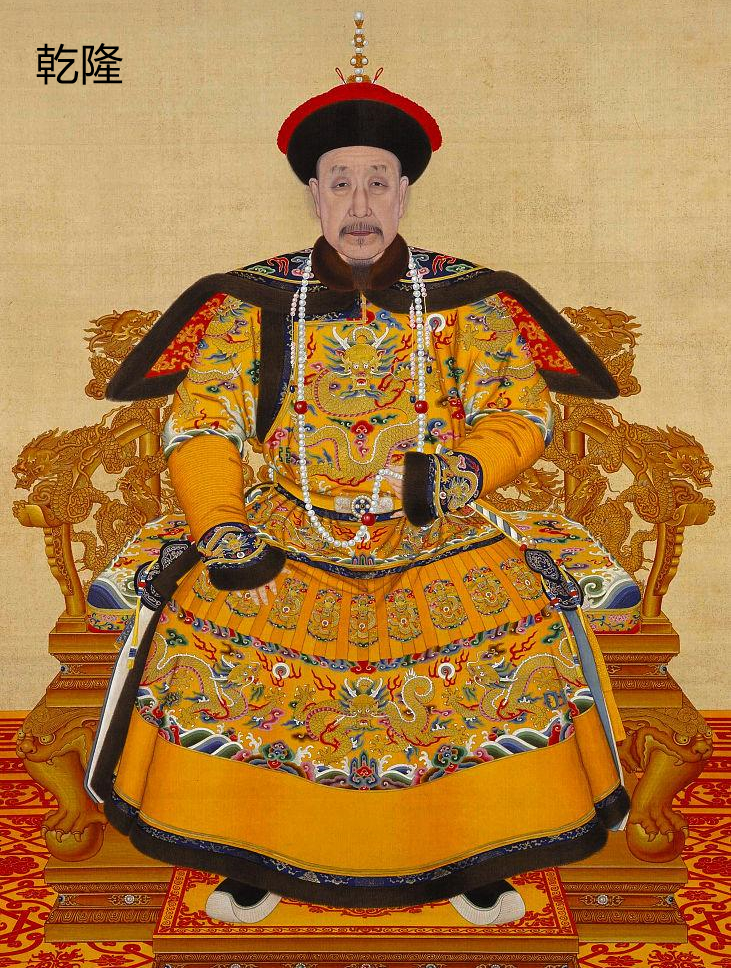
In the vast palaces of Xianyang, Emperor Qin Shi Huang sat upon a throne of unparalleled power. The first ruler to unify China, he had conquered kingdoms, built the Great Wall, and forged an empire under his rule. Yet, despite his triumphs, one fear haunted him relentlessly: death.
The Emperor was consumed by the thought that all his achievements, his empire, and his legacy could crumble if he succumbed to mortality. He sought not only to rule but to transcend time itself. His desire for immortality grew insatiable, transforming from ambition into an all-encompassing obsession.
Every court physician, alchemist, and mystic was summoned to offer solutions to his existential dread. They arrived bearing elixirs of questionable origin, promising eternal youth. But one by one, their failures became apparent. The Emperor’s fury was merciless—those who could not deliver were executed without hesitation.
The atmosphere of desperation gripped the court. Scrolls of ancient wisdom were scoured, legends of gods were unearthed, and tales of mythical islands whispered through the halls. Among these legends was the story of Penglai, a paradise beyond the eastern seas, said to harbour the elixir of life.
References:
- “The Emperor’s Quest for Immortality” – Southeast Asia: A Historical Encyclopedia by Ooi Keat Gin.
- “Legends of Penglai” – Ancient Pages.
Xu Fu’s Despair: The Trap of the Alchemist
Xu Fu, an alchemist of great renown, was summoned to the court. He understood the futility of the Emperor’s demand and the fate that awaited him should he fail. Qin Shi Huang’s obsession had already claimed countless lives—alchemists, scholars, entire households erased for their failures.
For all his skill, Xu Fu knew that no elixir could grant immortality. Yet, he also knew that to voice this truth was to invite death. Caught between the impossible and the inevitable, he resolved to propose a daring plan: a voyage to the legendary islands of immortality.
As night fell on the imperial court, Xu Fu often found solace in poetry, expressing the anguish he could never speak aloud.
Beneath the heavens, I bear a heavy chain,
A task that whispers promises, yet yields only pain.
The stars above are countless, yet none hold the key,
To a life eternal, unbound and free.
Oh, distant seas, take my sorrowed plea,
Hide me in your waves, set my spirit free.
References:
- “Xu Fu’s Role in the Qin Court” – Historical Records of Sima Qian.
- “The Desperation of Alchemists” – Ancient Origins.
The Grand Expedition
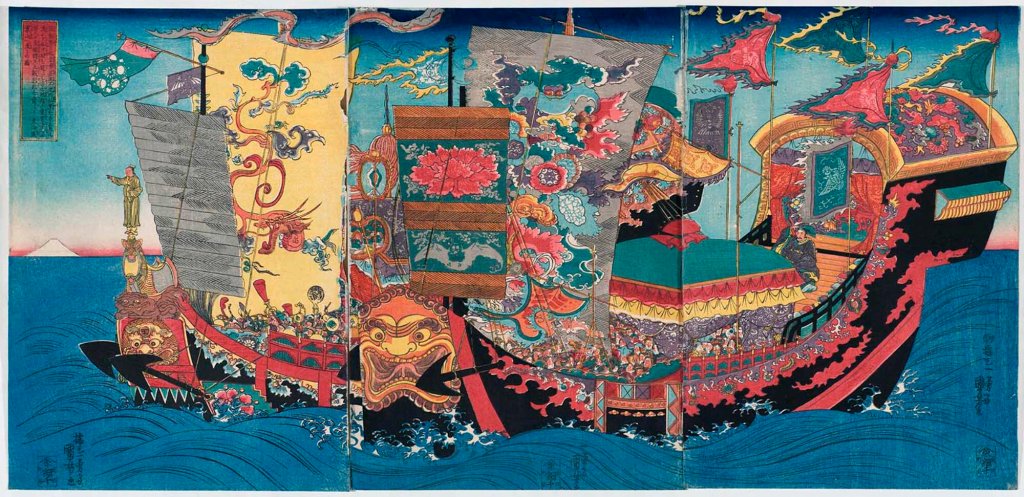
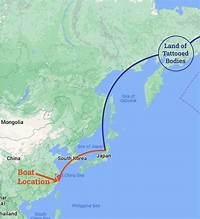
The Emperor, blinded by his desire for eternal life, granted Xu Fu’s requests: a fleet of 60 ships, an entourage of 3,000 young men and women, and the best craftsmen, farmers, and soldiers of the realm. With the fleet outfitted and provisions stocked, Xu Fu set sail from the eastern coast of China, likely departing from Langya (modern-day Lianyungang).
Utilising his knowledge of astronomy and navigation, Xu Fu charted a course eastward across the Yellow Sea. After weeks at sea, they arrived on the shores of what is now Japan, possibly in the Kyushu region.
References:
- “Xu Fu’s Voyage and Departure Point” – Wikiwand.
- “Early Chinese Maritime Voyages” – Journal of East Asian Studies.
Building a New Civilisation
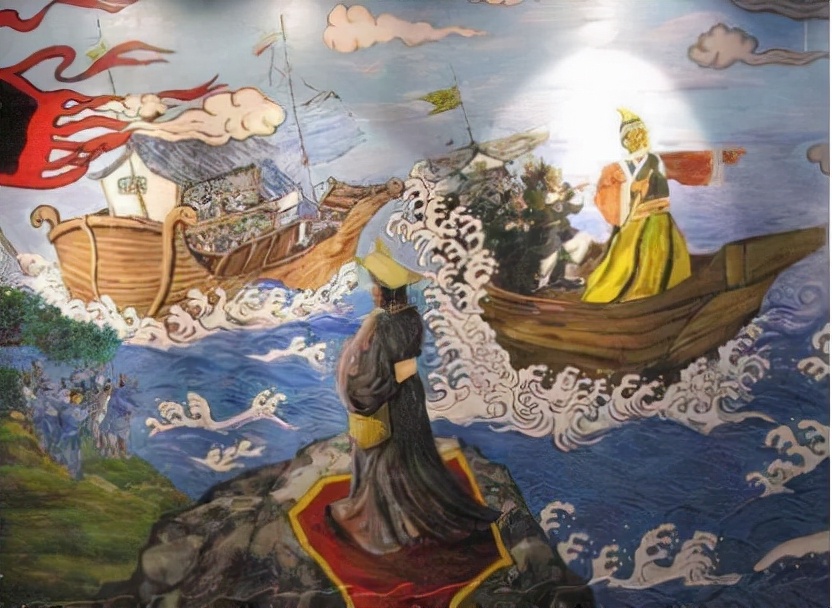
On these foreign shores, Xu Fu and his entourage faced the challenge of survival. They encountered the Jomon people, indigenous to Japan, whose knowledge of the land and sustainable practices proved invaluable. The settlers introduced advanced agricultural techniques, enabling rice cultivation, and shared innovations in medicine, metallurgy, and governance.
Xu Fu, recognising the impossibility of returning to China without the promised elixir, ordered the dismantling of the ships to prevent any thoughts of return. The settlers integrated with the local population, creating a blend of cultures that would shape Japan’s early civilisation.
Legends suggest Xu Fu was revered as a leader and even worshipped as a god. Shrines dedicated to him still stand in regions like Shingu, celebrating his contributions to agriculture, medicine, and society.
References:
- “The Influence of Xu Fu on Japanese Agriculture” – Japan Times.
- “Archaeological Discoveries Related to Xu Fu” – China Underground.
From Xu Fu to Today: The Thread of Connection
The story of Xu Fu’s voyage is more than a legend; it is a reminder of the connections that shape humanity. In ancient times, Japan looked to China as a source of wisdom and innovation. From the flowing brushstrokes of Chinese script to the profound teachings of Confucianism and Buddhism, these gifts were not imposed but embraced, laying the groundwork for Japan’s cultural and spiritual identity.
But the relationship has also been marked by strife. From the Mongol invasions to the Sino-Japanese wars, moments of violence and betrayal have left scars. Today, though politically tense, the two nations remain economically and culturally intertwined.
References:
- “Cultural Exchange in Ancient East Asia” – Power and Politics in Modern Southeast Asia by Damien Kingsbury.
- “Modern Sino-Japanese Relations” – South China Morning Post.
The Inescapable Thread
Humanity is bound together by an invisible thread, fragile yet enduring. Xu Fu’s story, like the countless others that followed, is a testament to this truth. His journey was born of desperation and fear, yet it created something lasting—a new civilisation shaped by the blending of cultures and traditions.
No culture exists in isolation. Even in times of conflict, the decisions of one ripple outward, touching others in ways unseen. To see the world as “us vs them” is to deny this truth. Every division is temporary. Every act of harm leaves its mark, not just on others but on ourselves.
The Tragic Beauty of Connection
Xu Fu’s journey was not one of triumph but of tragedy—a man driven by an impossible demand who found himself exiled to a new land. His survival meant creating something enduring, something beautiful in its sadness.
Perhaps Xu Fu himself felt the weight of this bittersweet legacy. Did he long for home as he gazed across the ocean? Or did he find solace in the lives he had saved and the society they built together?
References:
- The Legacy of Xu Fu – Green Shinto
- Cultural Interconnectedness in East Asia – The Diplomat
The Ocean Between Us
Today, the story of Xu Fu reminds us that humanity does not exist in a vacuum. No culture is isolated; every decision ripples outward. It is folly to view the world through the lens of “us vs them.” Every division is temporary.
The invisible threads of history bind us all. Xu Fu’s voyage, born of desperation, became a bridge between two great civilisations. It reminds us of the fragility of life, the resilience of the human spirit, and the beauty of building something lasting in the face of impermanence.
In remembering Xu Fu, we remember what it means to be human: to seek, to lose, to build, and to dream.
Final Poem: The Ocean’s Whisper
Beneath the stars, all paths converge,
Through time and tide, life does emerge.
No kingdom stands, no borders hold,
The threads of fate are finely scrolled.
To seek eternal, yet find the now,
A fleeting moment to take a vow.
To build, to share, a fragile bond,
In transient sands, our roots respond.
The sea divides, yet bridges form,
Through fire and frost, through calm and storm.
Xu Fu’s tale, both loss and gain,
A lesson carved in joy and pain.
The wheel turns on, as seasons flow,
What once was lost, we still bestow.
For life’s great truth, so often shown,
Is that no soul stands alone.
“天穹之下,万物交融,
潮汐之间,生命涌动。
权力不永,疆界不固,
命运长线,铭刻无数。”
 Echo in So Much Space: Perspectives on Progress and Peace
Leave a comment