West Borneo, with its dense rainforests and sprawling rivers, is home to remote towns like Nanga Pinoh, Nanga Ela, and Nanga Sokan. The region’s communities are deeply tied to the rivers that branch across the land, forming a network that has shaped life for centuries. The term “Nanga,” derived from the Iban language, refers to the mouth of a tributary where it meets a larger river. These junctions, rich in resources and vital for transport, naturally became hubs for settlements and trade.
The rivers of West Borneo are more than waterways; they are lifelines that have shaped the history and daily lives of its people. From the mighty Kapuas to its numerous tributaries, these rivers have facilitated trade, agriculture, and cultural exchange for centuries. However, they also present challenges, with seasonal flooding disrupting lives and livelihoods, and infrastructure often struggling to keep pace with the demands of a growing population.
One of the earliest known kingdoms in Indonesia, the Kutai Martadipura Kingdom, was established around the 4th century in East Kalimantan, along the Mahakam River. Initially a Hindu kingdom, it was later succeeded by the Kutai Kartanegara Sultanate, which embraced Islam in the 17th century, reflecting broader trends in Southeast Asia. These river-based kingdoms thrived on trade, using the waterways to connect with neighbouring regions and distant empires.

The Dayak people, indigenous to Borneo, have long viewed the rivers as sacred lifelines. These waterways were not only routes for transport and trade but also sources of sustenance and cultural identity. While some Dayak tribes historically practiced headhunting, which struck fear into neighbouring regions, such practices were tied to spiritual and territorial beliefs rooted in their environment. Today, the Dayak are often seen as stewards of the land and rivers, adapting to modernity while preserving their deep connection to nature.
The arrival of Chinese-Indonesian communities added new dimensions to this river-based life. Drawn to West Borneo in the mid-18th century by opportunities in mining and agriculture, these migrants settled along the riverbanks, where they could access resources and establish trade routes. To adapt to their new environment, they formed kongsis—cooperative societies that provided mutual support. These societies thrived, with some establishing towns like Singkawang, whose name, derived from the Hakka phrase “San Khew Jong” (山口洋), meaning “Mount-Mouth-Sea,” reflects its geographical connection to the rivers and sea.
One of the most remarkable legacies of Chinese migration was the founding of the Lanfang Republic in 1777 by Luo Fangbo. Based in Mandor, near the Kapuas River, this self-governing kongsi federation became a model of resilience and autonomy. The rivers served as arteries for trade and governance, enabling the republic to manage its resources and maintain communication across its territory. Despite its eventual fall to Dutch colonial forces in 1884, the Lanfang Republic remains a symbol of ingenuity and cooperation.
World War II brought unimaginable hardship to West Borneo. The Japanese occupation targeted leaders and communities, using brutal tactics to suppress resistance and maintain control over the region. Among the countless stories of suffering and survival, one tale stands out—a poignant reminder of the complexities of human relationships in times of war.
Years before the Japanese invasion, a respected teacher from West Borneo had traveled to Taiwan to teach at a local school. This was during a period when Taiwan, under Japanese colonial rule, was experiencing significant cultural and educational shifts. The teacher, known for his kindness and dedication, formed a close bond with his students, including a young Taiwanese boy who admired him deeply.
Decades later, as the teacher found himself imprisoned by Japanese forces in Borneo, fate brought him face-to-face with his former student, now a soldier conscripted into the Japanese army. Both men recognized each other immediately, but in the tense environment of the prison, they chose to feign ignorance. The former student, bound by duty but unwilling to betray his mentor, arranged for a private conversation where he revealed a horrifying plan: the prisoners, including the teacher, were to be drugged and transported in trucks, only to be executed en route.
The soldier advised his former teacher to feign compliance by pretending to consume the sleeping pills. True to his word, during the journey, the pills were distributed among the prisoners. The teacher and a trusted friend followed the advice, swallowing the pills without actually ingesting them. As the truck traveled through dense forests and rough paths, the prisoners gradually fell unconscious. At a planned stop, the truck’s guards stepped out for a brief inspection.
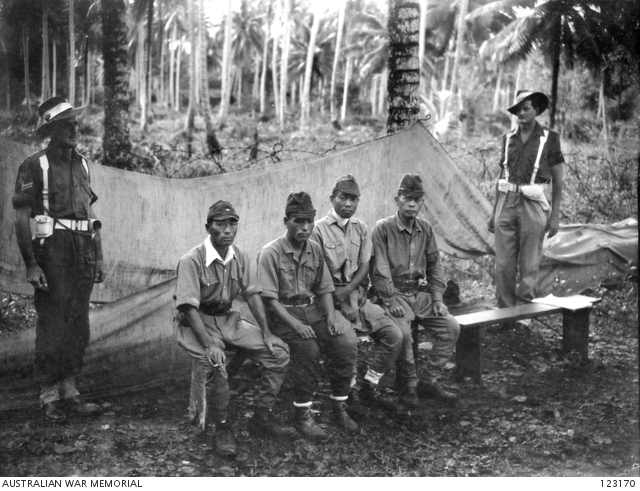
Seizing the moment, the student discreetly created an opportunity for escape. He signaled his teacher, who leapt from the truck and disappeared into the jungle. Tragically, his friend, paralyzed by fear, chose to remain behind. The teacher survived, but the truck later continued its journey to a gruesome end—the remaining prisoners were executed, their bodies discarded in rivers or mass graves.
After the war, Chinese-Indonesians rebuilt their lives along the rivers, continuing to use these waterways for trade and transport. Intermarriage and shared languages blurred cultural lines, creating a dynamic and diverse society. Markets by the rivers bustled with activity, where traders unloaded goods from boats and mingled with local farmers and Dayak hunters.
The 1980s Transmigration program introduced new settlers from Java and other islands, diversifying the population further. Many of these migrants settled near the rivers, cultivating the land and establishing vibrant communities. While the program faced challenges, such as disputes over land use, it also fostered new cultural exchanges and economic opportunities.
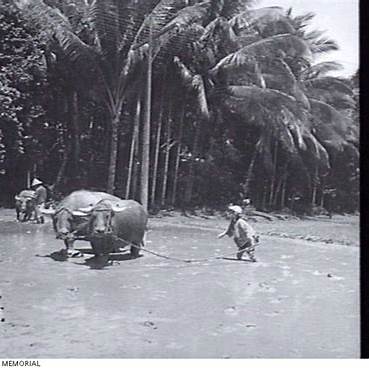
Today, the rivers of West Borneo remain vital lifelines. Seasonal flooding disrupts lives and livelihoods, while poorly maintained infrastructure limits access to remote areas. Despite these difficulties, the rivers continue to connect communities, enabling trade, transport, and cultural exchange. Markets, schools, and social spaces by the rivers are hubs of interaction, reflecting the resilience and adaptability of the people who call this region home.
West Borneo’s story is one of contrasts: a region shaped by diversity, resilience, and a shared struggle to adapt and thrive. The rivers, with their ability to nurture and challenge, are central to this narrative. They remind us of the interconnectedness of communities and the enduring strength of human collaboration. In this land of rivers, every ripple carries a story, shaping the past, present, and future.
References
- Kutai Martadipura Kingdom:
- “Kutai Martadipura: The Oldest Hindu Kingdom in Indonesia.” National Library Board Singapore.
https://eresources.nlb.gov.sg/history/events/6594de5f-2d82-406a-86f5-f94a44a36782
- “Kutai Martadipura: The Oldest Hindu Kingdom in Indonesia.” National Library Board Singapore.
- Dayak People and Headhunting Practices:
- “The Dayak of Borneo: Past and Present.” Borneo Cultural Institute.
https://borneoculturalinstitute.org/articles/dayak-headhunting-past-present
- “The Dayak of Borneo: Past and Present.” Borneo Cultural Institute.
- Chinese-Indonesian Migration and the Lanfang Republic:
- “The Lanfang Republic: A Chinese State in Borneo.” Journal of Southeast Asian Studies.
https://www.cambridge.org/core/journals/journal-of-southeast-asian-studies/article/abs/lanfang-republic-a-chinese-state-in-borneo/
- “The Lanfang Republic: A Chinese State in Borneo.” Journal of Southeast Asian Studies.
- Japanese Occupation in West Borneo:
- “Surviving the Japanese Occupation: War and Its Aftermath in Borneo.” Borneo Research Bulletin.
https://borneoresearchbulletin.org/japanese-occupation-war-aftermath
- “Surviving the Japanese Occupation: War and Its Aftermath in Borneo.” Borneo Research Bulletin.
- Transmigration Program in Indonesia:
- “Transmigration in Indonesia: Lessons from Its Environmental and Social Impacts.” World Bank Publications.
https://openknowledge.worldbank.org/handle/10986/11284
- “Transmigration in Indonesia: Lessons from Its Environmental and Social Impacts.” World Bank Publications.
- Significance of Rivers in West Borneo:
- “Rivers and Society in Southeast Asia: A History of Water and Culture in Borneo.” Asian Studies Review.
https://www.tandfonline.com/doi/full/10.1080/rivers-and-society-borneo
- “Rivers and Society in Southeast Asia: A History of Water and Culture in Borneo.” Asian Studies Review.
 Echo in So Much Space: Perspectives on Progress and Peace
Leave a comment