I. The Shadow of Majapahit
When the Majapahit Empire collapsed under the rising tide of Islam in Java during the late 15th century, Bali became more than a sanctuary, it became a living reliquary of a lost civilisation.
As temples crumbled and courts fell silent in Java, priests, dancers, artisans, warriors, and nobles crossed the narrow sea. They brought what they could carry: palm-leaf manuscripts, ancestral heirlooms, ceremonial knowledge, and most of all, a memory. A memory of a world ruled by balance, ceremony, and cosmic order. That memory found fertile ground in Bali, where the old rhythms were not only remembered, but adapted and reborn.
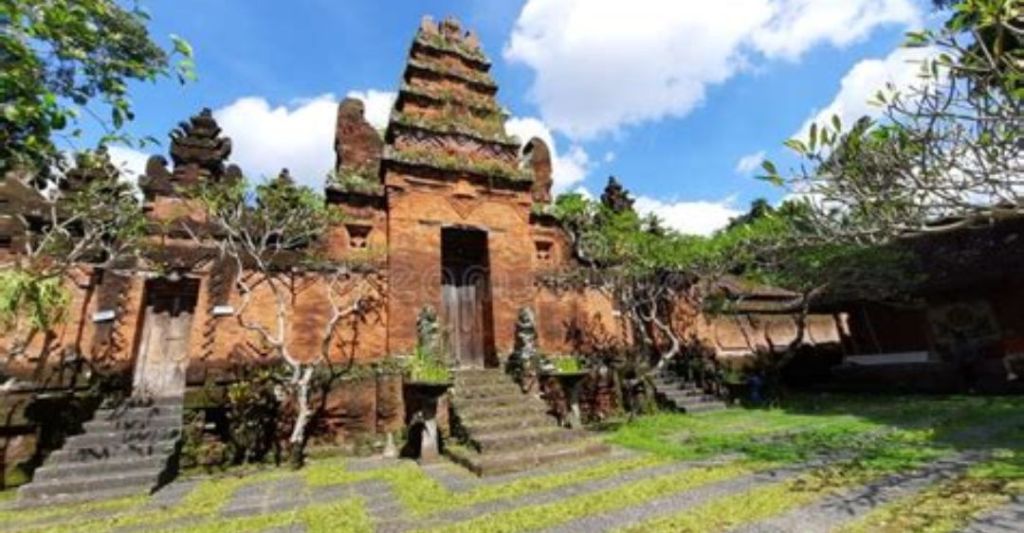
To this day, you can feel the echo of Majapahit in the Kawi inscriptions, the shadow plays, the temple architecture, and even in the quiet formality of Balinese manners. Bali became a time capsule, but also a fragile island standing alone.
That fragile sovereignty would eventually break.
In 1906, the Dutch colonial army marched into Denpasar, demanding submission from the royal court of Badung. But the raja had no intention of surrendering. Dressed in pure white, his body adorned with royal gold, he and his court walked barefoot toward the invaders, surrounded by priests, wives, children, servants, and guards, many armed with kris daggers, others with nothing at all.
This was not surrender. It was puputan, a ritual ending.
At a silent signal, the raja plunged his dagger into his own chest. Others followed. Some say the women began to sing. Some say the children cried. But the Dutch soldiers, unprepared for this spectacle of deliberate collective death, opened fire. Many were shot while standing still, others while staggering from self-inflicted wounds. Survivors were finished off by relatives to prevent capture.
More than a thousand people died that day, not in chaos, but in ceremony. It happened again in Klungkung in 1908, when the Dutch returned. The raja there met the same end.
So was it suicide? Not quite.
It was not death out of despair, it was death as refusal.
Refusal to kneel. Refusal to let their kingdom be rewritten in the ink of empire.
Even today, when you walk through the ruins of the palaces, there is no grandeur left. Only silence. The kind of silence that hangs over sacred ground where the soil itself has witnessed too much.
Bali did not go quietly. But it went.
II. The Faith That Stayed, But Changed
What the Javanese brought with them to Bali was not just ritual, but cosmic framework. Yet over centuries, this belief system, rooted in Hinduism, coloured by Buddhism, and interwoven with local animism, took on a shape that is uniquely Balinese.
Balinese Hinduism is not a copy of Indian Hinduism. It is a cousin that chose a different path in a different land.
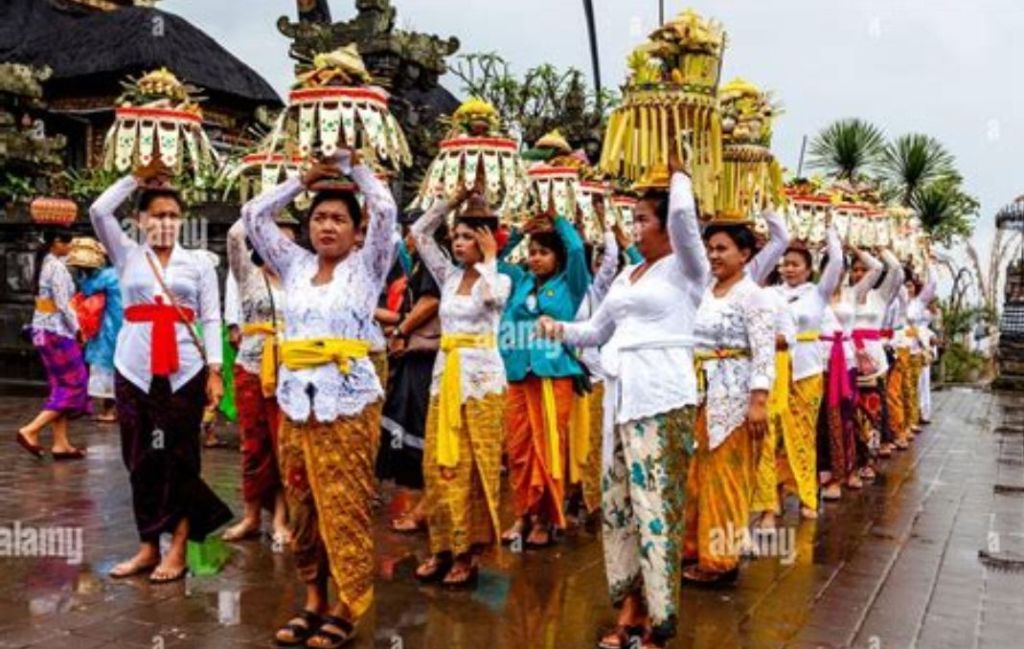
Where Indian temples resound with Sanskrit chants and vast pantheons, Balinese temples are intimate, woven into neighbourhoods, rice fields, forests, and volcano slopes. Their rituals are not locked behind caste hierarchies but shared by village associations and family lineages. Offerings are not occasional, they are daily. A single morning may see dozens of hands placing canang sari at doorways, shrines, dashboards, even footpaths.
Gods in Bali share space with spirits of place, ancestral ghosts, and local forces known as buta kala. The Balinese do not only pray upward, they pray outward and downward too, maintaining harmony in a universe understood as always shifting, always in need of balance: Rwa Bhineda, the sacred duality.
In 2024, a well-intentioned but unaware group of Indian Hindu travellers arrived at Pura Tirta Empul, one of Bali’s holiest water temples. They had prepared garlands, sacred threads, and mantras, but also a desire to lead the prayer, to perform the ceremony as they understood it. The temple’s keepers, humble but firm, refused.
“You are welcome to pray,” they said, “but this ceremony is not yours to conduct.”
The visitors were confused. Offended, even. They had travelled across oceans to this sacred site, and now they were told: you may offer, but not orchestrate.
What they did not understand was this: Balinese temples are not public monuments in the way many imagine. They are community shrines, woven into the lineage of the villagers who tend them. Their rites are inherited, their meanings layered with local cosmology and ancestral obligation. It’s not exclusion; it’s context.
Here in Bali, faith is lived, not displayed. To be invited into ritual is to be trusted with something intimate. And that trust is earned slowly, often through generations.
So yes, Hinduism stayed. But it was transformed by the island, by its volcanoes, its rice cycles, its spirits, its shadows.
And to this day, even in the age of hashtags and drone footage, some rituals remain quiet, inward, guarded, not for sale.
III. A Paradise in Compromise
Tourism saved Bali.
And it threatens to undo it.
In the 1920s and 30s, a trickle of Western artists, anthropologists, and wanderers arrived, people like Miguel Covarrubias and Walter Spies, each declaring Bali to be a kind of living Eden, untouched and authentic. But paradise, once named and packaged, begins to vanish.
The waves kept coming: surfers, seekers, digital nomads, backpackers, honeymooners, Instagrammers, investors. Bali kept absorbing them all. It bent to serve, to welcome, to accommodate.
And in doing so, something began to hollow out.
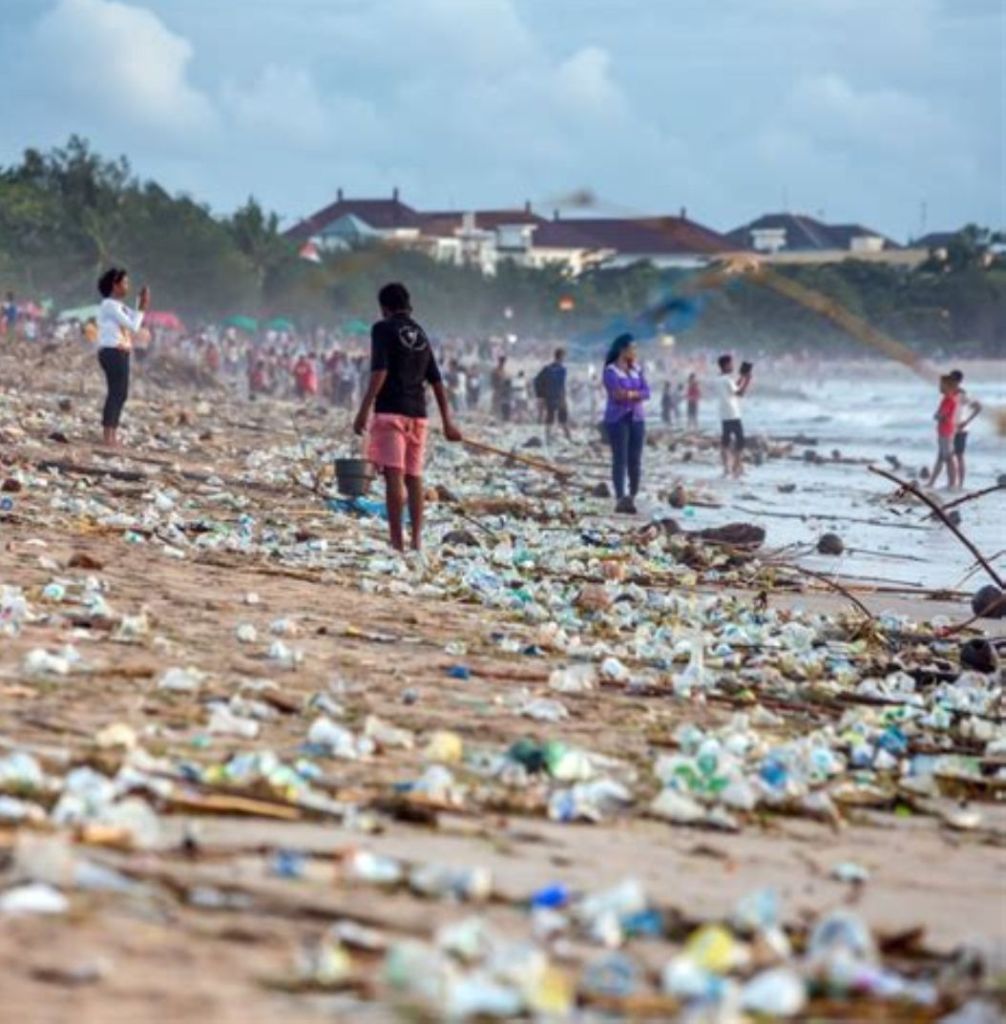
The mountains of plastic, the choked rivers, the endless villas displacing farmers. Ceremonies timed to tour buses. Culture sliced into samplers. The soul of the island now whispered behind the noise of scooters and the click of camera shutters.
And yet, even now, even in this compromise, Bali still has moments that stop you. That shake you. That remind you this place is older than memory.
I remember one.
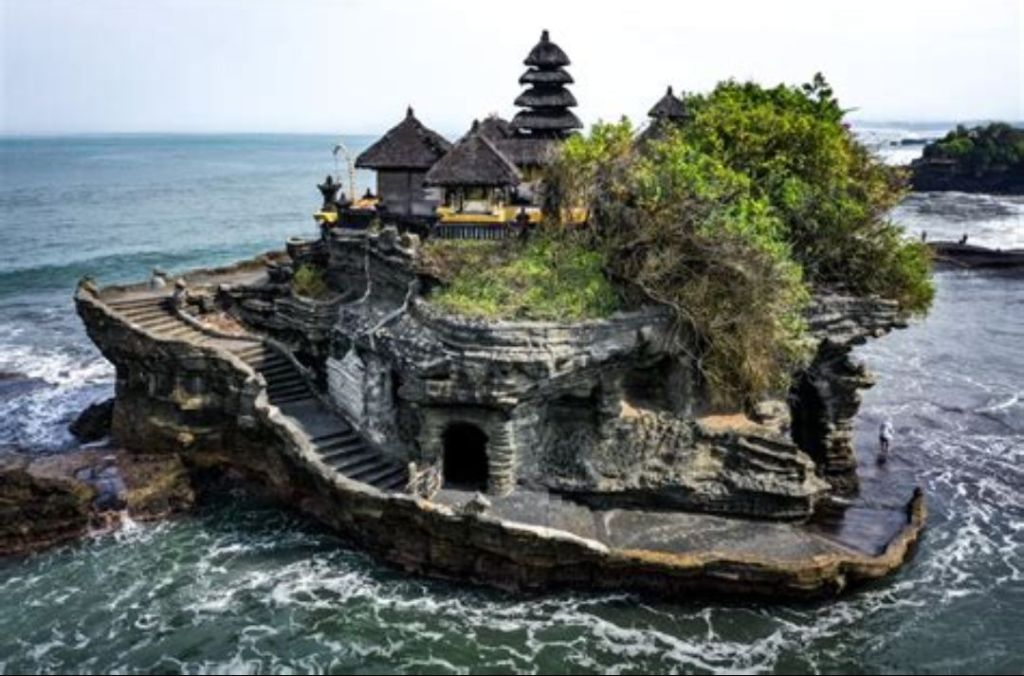
It was 2004, my first visit to Tanah Lot. I’d just been married. I didn’t come looking for prophecy—I came as a tourist. But something pulled me toward the side of the temple, past the crowds, to a dark opening carved into the rock.
It was the sacred snake cave. I entered, barefoot, unsure. Inside, it was cool and shadowed, lit only by a flickering oil lamp. A priest sat cross-legged in silence. Coiled nearby was a black-and-white sea snake, said to be the magical guardian of the temple, born of the founder’s sacred cloth.
The priest looked at me for a long time before speaking.
“You are Indonesian,” he said, “but your spirit comes from far away. You’ve just married, but you will soon be separated. Not from hate, but from distance. You will live far, and you will move often. Countries, states. Your feet will not stay still.”
His words struck me as strange, dramatic. But I smiled politely and left.
Now, two decades later, I remember that moment clearly.
My wife and I separated soon after, not by choice, but by visa barriers. I moved abroad for work, and since then, I’ve never stopped moving. Different countries. Different states. A fly-in, fly-out rhythm now defines my life, while my family stays anchored.
The island had seen me, seen through me, in that cave of stone and silence and snake.
Bali does that sometimes.
Not loudly. Not theatrically.
Just, quietly. Deeply. Unforgettably.
That’s the cruel magic of the island: it gives you beauty and mystery so profound, you almost forget the price it pays to keep giving.
IV. The Honest Gesture
For all the erosion, for all the packaged culture and plastered smiles, Bali still surprises you.
There are moments, quiet, unsellable moments, that reveal something deeply human, something unteachable.
A friend leaves a pair of Ray-Bans at a warung. Days later, when he returns on a whim, the sunglasses are waiting in a plastic tub behind the counter. Wrapped in a napkin. No name, no fuss.
At a laundry in a dusty lane, I once left cash tucked in a trouser pocket, enough to tempt. When I came back, the clothes were neatly pressed, and the money had been folded into an envelope, with a note in delicate handwriting: “Found in your pocket.”
No marketing campaign tells these stories. No influencer captures them. These are the small kindnesses that never go viral, but they echo longer.
And you begin to wonder:
Is this hospitality or belief?
A performance refined over centuries of temple offerings and guest-welcoming rituals?
Or is it simply survival, pragmatic kindness in a world that demands cheerful labour from the brown-skinned, the barefoot, the “grateful”?
You don’t know.
And maybe that’s the point.
Because in Bali, gestures mean more than words. A glance. A waiter noticed, then giving you an extra pillow for your seat when you’re uncomfortable. A quiet “Om Swastiastu” even when you’ve forgotten how to answer it.
And maybe it’s not about whether it’s transactional or sacred.
Maybe it’s both.
Maybe it’s neither.
Here, karma is not metaphor, it’s architecture. It’s woven into the floor tiles, the road offerings, the silence of the waiter who returns your phone with both hands and a bowed head.
They don’t say: “We’re better than you.”
They don’t say: “We deserve more.”
They simply continue.
And in that, there’s dignity.
There’s power.
Even if it’s invisible to those looking only for cheap beer and perfect sunsets.
V. The Tension Beneath the Incense
Bali wears its beauty lightly.
But look closer, and you’ll see it’s carrying far more than flowers and smiles.
There is tension here, unspoken, but everywhere.
In the eyes of the waiter who brings your drink with perfect grace.
In the silence of the woman sweeping canang offerings before dawn.
In the shoulders of the man who loads another tourist’s surfboard onto his van, without a name, without thanks.
There is pride, yes. But also pressure.
Pressure to keep the façade unbroken, even as the weight grows.
The island has always been asked to serve.
First to kings.
Then to colonisers.
Now to wanderers and dreamers who arrive hungry for peace, but leave behind noise, waste, and entitlement.
And yet… Bali doesn’t break.
It bends, and bends again.
Because here, people have learned how to survive by yielding without surrendering.
Even as the roads choke with traffic,
even as the rivers carry too much plastic,
even as the rituals are timed to the airport schedule,
there is a stubborn core beneath it all, a memory of what was, and a quiet refusal to forget.
You see it in the old man who still walks barefoot to temple, no matter how many scooters scream past him.
In the young girl who learns her grandmother’s dance, not for the stage, but for the gods.
In the quiet dignity of the man who returns your wallet, because that is what his father taught him.
Bali is not perfect.
But it is real.
And real things carry contradiction.
Its people are neither submissive nor rebellious, but something else, resilient, with a grace that endures despite the noise, despite the erosion.
To love Bali is not to romanticise it.
It is to see the cost of its beauty.
To hear the silence behind the gamelan.
To feel the tension in the incense smoke, the sweet scent masking something deeper.
The island has given the world more than it had to.
Maybe one day, it will be allowed to take something back.
References
1. Majapahit Legacy in Bali
Pura Maospahit, Denpasar: https://www.nowbali.co.id/pura-maospahit-a-legacy-of-the-majapahit-in-denpasar/
Majapahit Terracotta Artifacts: https://en.wikipedia.org/wiki/Majapahit_terracotta
Trowulan Archaeological Sites: https://veronikasadventure.com/trowulan-majapahit-archaeological-sites/
2. Puputan (1906–1908)
Dutch Invasion and Ritual Suicide: https://en.wikipedia.org/wiki/Dutch_intervention_in_Bali_(1906)
3. Balinese Hinduism & Religious Boundaries
Indian Hindu Tourist Denied Ceremony Role: https://www.republicworld.com/world-news/rest-of-the-world-news/indian-hindu-tourist-denied-permission-to-pray-at-bali-temple-know-more-in-detail/
4. Impact of Tourism
Environmental Toll of Mass Tourism in Bali: https://www.unsustainablemagazine.com/negative-impacts-of-tourism-in-bali/
5. Sacred Snake Cave at Tanah Lot
Myth and Local Belief at Tanah Lot: https://budayabali.com/the-mystery-of-the-sacred-snake-cave-at-tanah-lot-temple-mystical-life-and-local-wisdom/
6. Balinese Hospitality and Kindness
Real Stories of Local Kindness (Photos): https://www.flickr.com/photos/kenkoon/sets/72157626401479289
Bali Life Foundation (Community Acts of Kindness): https://www.balilife.org/
Homestay and Cultural Tourism in Bali: https://www.homestay.com/indonesia/bali
 Echo in So Much Space: Perspectives on Progress and Peace
Leave a comment